
A key part of EXUS’s work in SMARTeeSTORY is developing the Analysis and Prediction Service: a tool designed to forecast the energy needs of historic buildings up to 24 hours ahead. The aim is simple: help the wider SMARTeeSTORY system anticipate a building’s needs, rather than merely respond after demand has already changed.
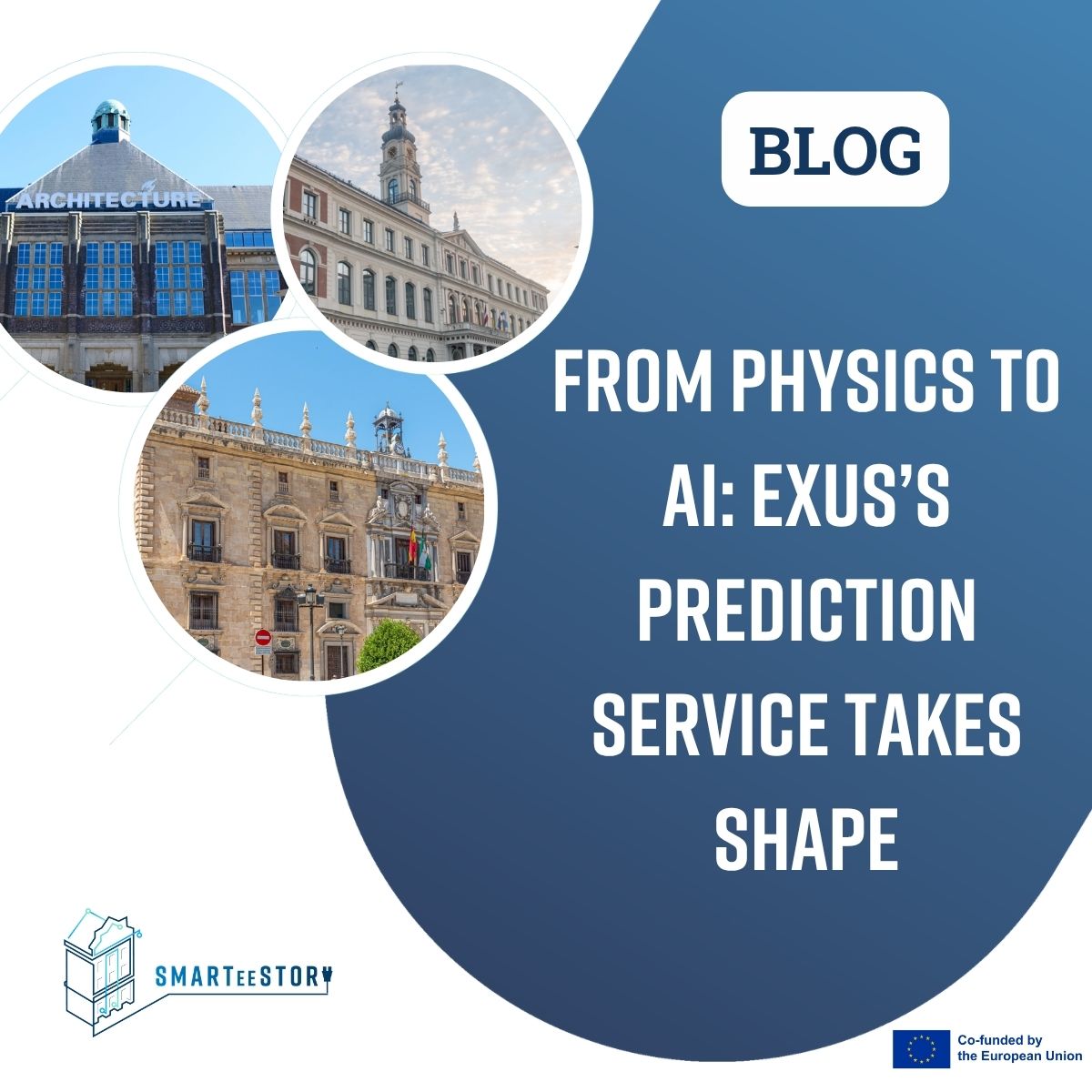
The service is being developed for the project’s three demonstration sites in Delft, Riga and Granada. As live monitoring data was not available at the beginning of the work, EXUS used simulation data produced from Tecnalia’s physics-based building models. In collaboration with RINA-C and CARTIF, the team incorporated the relevant energy-balance equations and created a common process for preparing data for forecasting.
EXUS then trained AI-based forecasting models to recognise how energy demand changes over time. Simulated data was reshaped for LSTM (Long Short-Term Memory) neural networks, using PyTorch Lightning. The team explored both room-by-room models and a wider model that learns from the whole building. The latter produced better preliminary results, largely because it could learn from a larger set of data while still reflecting the similar patterns found across rooms in the same site. The model generates forecasts every 15 minutes, looking one full day ahead.
These early results are encouraging, but they are not the end of the story. They are based on simulated data, so the models will now be retrained and refined as calibrated building models and real monitoring data become available. This will allow EXUS to check performance in real conditions, explore whether different sites need different modelling approaches, and include further information such as occupancy patterns and user preferences.
To make the service usable beyond the research environment, EXUS has also developed a secure and reliable way for each model to communicate with the SMARTeeSTORY platform. In practical terms, this enables forecasts to be requested and shared automatically, rather than being produced manually by the team.
The first real data arrived from Delft. EXUS developed a dedicated process to interpret the raw sensor data and compare it with the physics-based model, supporting Tecnalia’s ongoing calibration work. Data from Riga and Granada will further strengthen the models as the project progresses.
Ultimately, the forecasts will be shared with SMARTeeSTORY’s Control and Optimisation Service. This will allow the system to plan ahead when managing building systems, supporting lower energy use while maintaining comfortable conditions for occupants.