
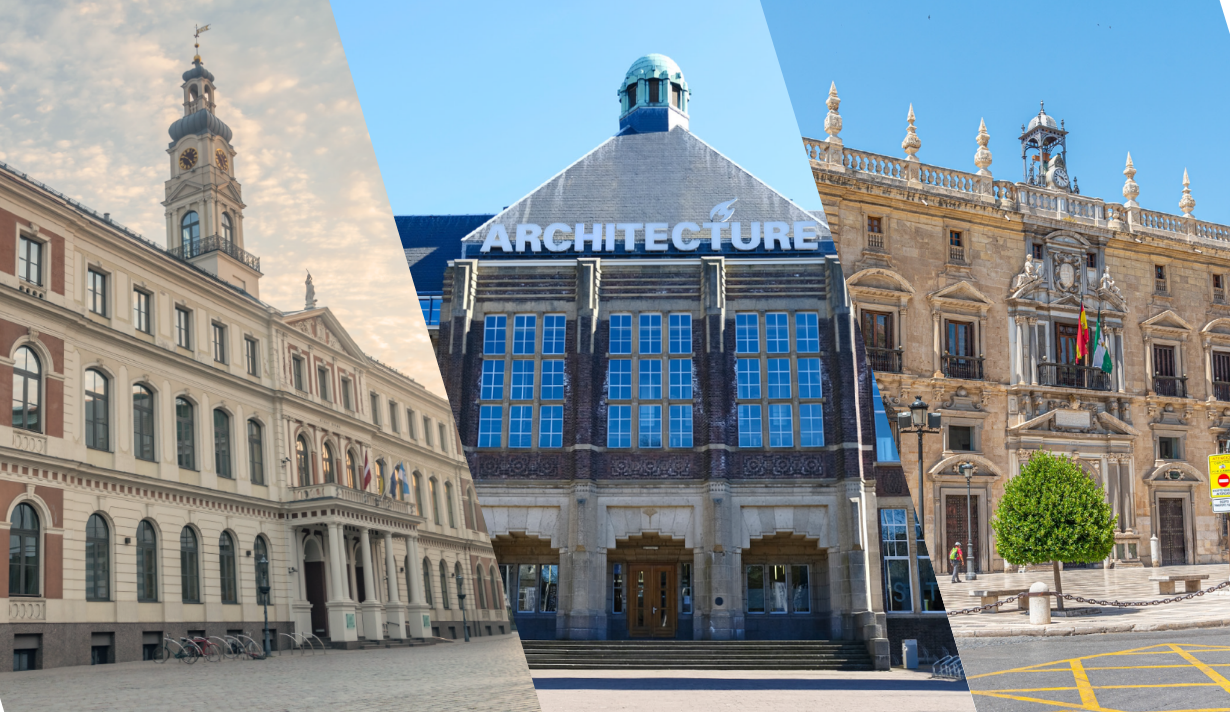
Riga City Hall, the Royal Chancellery in Granada, and TU Delft’s Faculty of Architecture have now reached a key milestone in the SMARTeeSTORY project: all three buildings are fully equipped, connected, and ready to operate as smart‑ready energy systems. Following an extensive period of installing sensors, smart devices, automation components, and digital infrastructure, the project has completed the step that ensures these systems work together reliably. Each historic building is now prepared for advanced energy management and optimisation.
With the buildings now fully equipped, the project has recently successfully completed the commissioning of the systems in all three herigate building. This is an essential step in SMARTeeSTORY, turning installed technology into a working, reliable system.
Up to this point, the work has been successfully carried out by Schneider Electric alongside the local partners responsible for each pilot: TU Delft for the Delft site, Cuerva Energia for Granada and the Riga Energy Agency for the Latvian demonstrator. Their roles were crucial in navigating the challenges that each heritage building presents during installation and commissioning.
Demo site updates
Riga
Focus: Upgrading the building’s intelligence layer and improving its ability to sense and respond to changes in user needs.
Particularities: Integration of EV chargers, installation of a new weather station and assessment of existing shading systems as part of the preparation for future automation.
Granada
Focus: Improving energy efficiency and user comfort through enhanced indoor environment control.
Particularities: A complex mix of historical architecture and modern building equipment requires careful integration of HVAC, fan coils and lighting into a responsive control environment.
Delft
Focus: Enhancing digital control over a selected office area to support the university’s carbon‑neutral goals.
Particularities: Optimisation of lighting, HVAC and smart blinds/shading control, alongside the integration of the weather station in a highly dynamic university setting.
Overall status
All three buildings are now fully instrumented, connected and prepared to support the implementation of the SMARTeeSTORY Building Energy Management System. The upcoming steps involve continuous data collection, deployment of control strategies and further refinement based on real operational conditions.