
Following an intensive period of installation and commissioning across its demonstration sites, SMARTeeSTORY has reached a key transition point. The technical groundwork is largely complete: systems are installed, equipment is operational, and digital infrastructures are in place.
The focus is now shifting. The question is no longer how to set up the system, but how it performs in real buildings, with real users, in real conditions. This marks the beginning of a new phase where the project meets reality.
Turning buildings into connected environments
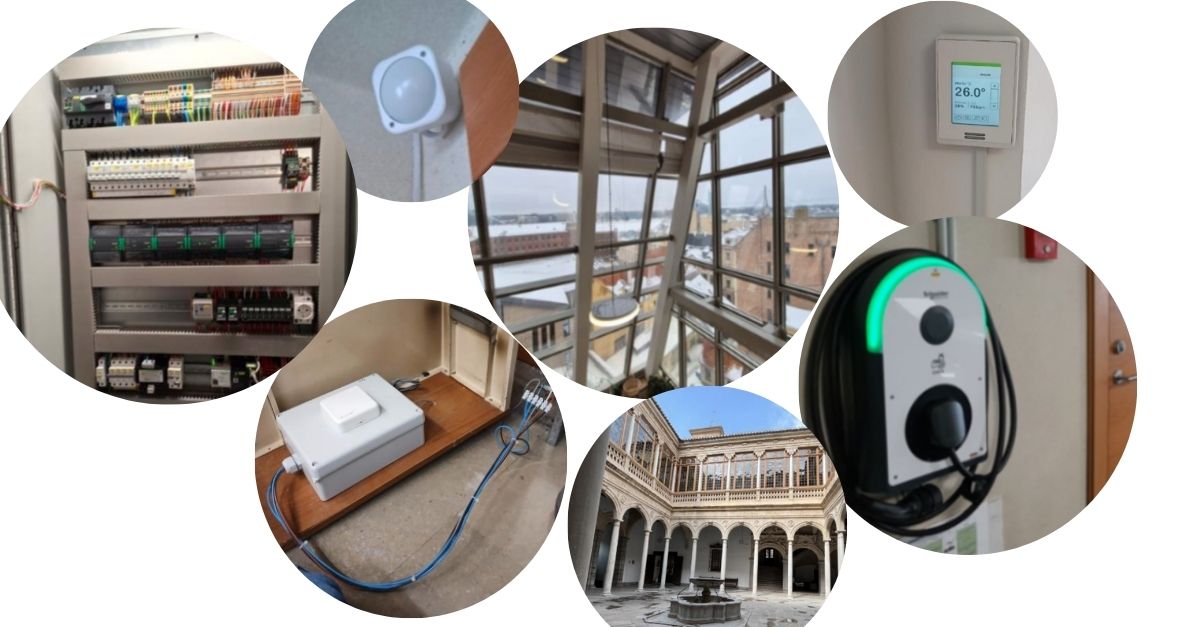
Commissioning has enabled buildings to become active parts of the SMARTeeSTORY system. Sensors, control systems, and building management infrastructures are now monitoring energy use, indoor environmental conditions, and user behaviour.
At the same time, the platform is beginning to connect with these systems, allowing data to be transferred and aggregated. Initial integrations show how different components: from devices to cloud services, can start working together. In essence, buildings are becoming connected, data-driven environments, forming the foundation for more intelligent operation.
Moving from assumptions to real-world data
A major milestone is the start of pre-monitoring activities across the demo sites. For the first time, the project is generating real operational data on both building performance and user experience. This is a critical shift. Much of the work so far has been based on models and assumptions. Now, SMARTeeSTORY begins to build the evidence needed to validate and refine its approach.
At the same time, this phase reveals complexity. Data is not yet consistently available across all sites or fully integrated into the platform. As a result, the project sits in an intermediate stage: data is being produced, but not yet fully leveraged.
Preparing the intelligence layer
In parallel, advanced work on predictive models and control strategies is largely in place. These tools are designed to optimise energy use and improve comfort based on user needs. However, their full deployment depends on reliable and continuous data streams. Without this, models cannot be properly calibrated or validated.
The project is therefore technically ready, but still needs real-world data to unlock its full potential.The current focus is increasingly on integration: connecting data, models, and building systems into a fully functioning ecosystem. Initial progress is visible, but full end-to-end operation, where the system can analyse and respond in real time, is still ahead. Achieving this requires stable data flows and consistent performance across all demonstration sites.
Navigating real-world complexity
We've learned from our demo sites that working in real buildings inevitably brings challenges. Integration issues between systems, site-specific constraints, and regulatory or procurement processes continue to shape progress. In some cases, planned interventions need to be adapted or postponed, requiring additional coordination and problem solving.
While these factors can slow development, they are essential to understanding how such solutions perform outside controlled environments. They highlight what it truly takes to implement smart, user-centred building systems in practice.
SMARTeeSTORY has laid the necessary groundwork for smart and energy efficient historical buildings. Systems are running, data collection has begun, and analytical tools are ready to be applied. The project is now transitioning from building its technical foundation to demonstrating real-world impact: where the most critical work happens.