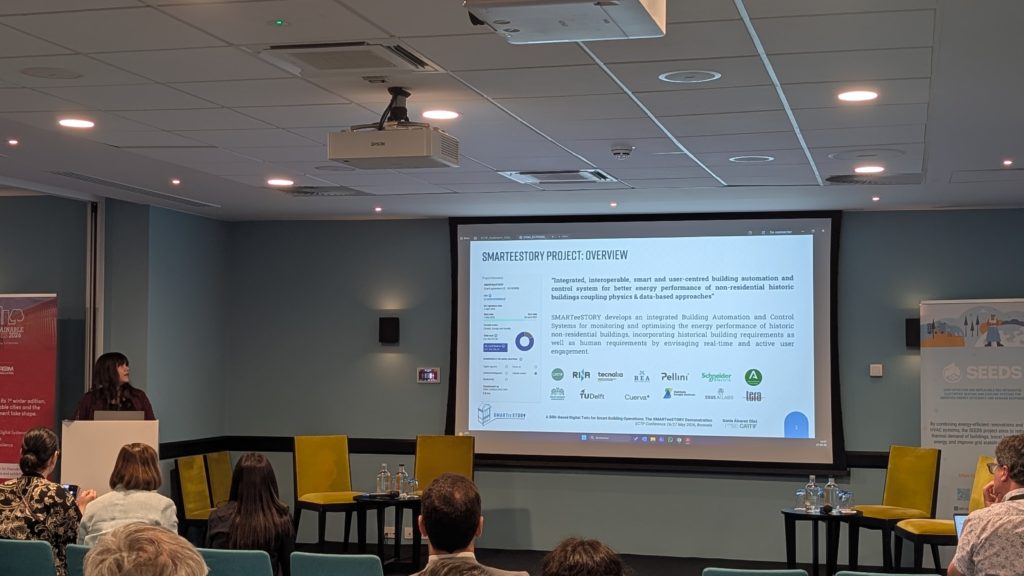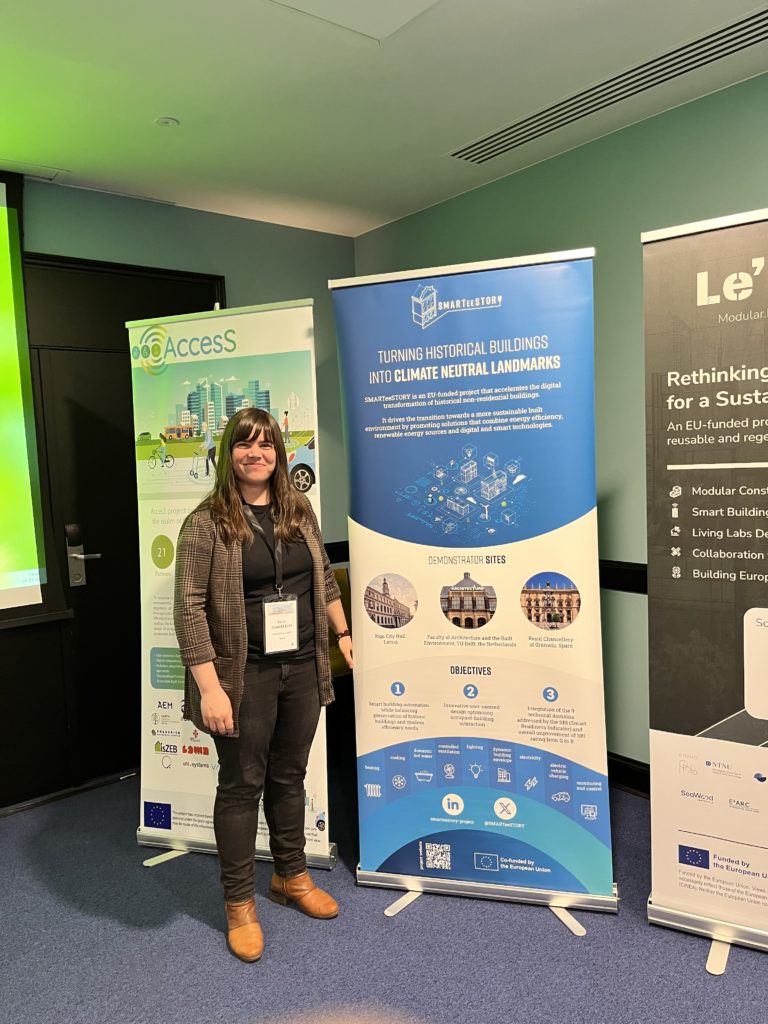
On 27 May, SMARTeeSTORY partner Sonia Álvarez from CARTIF participated in the European Construction and Sustainable Built Environment Technology Platform (ECTP) Annual Conference. The event brought together key actors in the construction and built environment sectors.
During the conference, Sonia presented the BIM-based Digital Twins for smart building operations developed within SMARTeeSTORY. The project is exploring how advanced digital tools can support the management of historic non-residential buildings, where improving energy performance often needs to be carefully balanced with heritage preservation. In SMARTeeSTORY, the Digital Twin is connected to a Digital Building Logbook, enabling facility managers to manage building documentation and update the BIM models that support the creation and maintenance of the twin.
Through 2D and 3D visualisation, the system connects building models with monitoring, prediction and control services developed within the project. This creates a closed-loop approach that enables both real-time data visualisation and interaction with building systems. As a result, facility managers can gain a clearer understanding of building performance and make better-informed decisions to improve daily operation, comfort and energy efficiency.
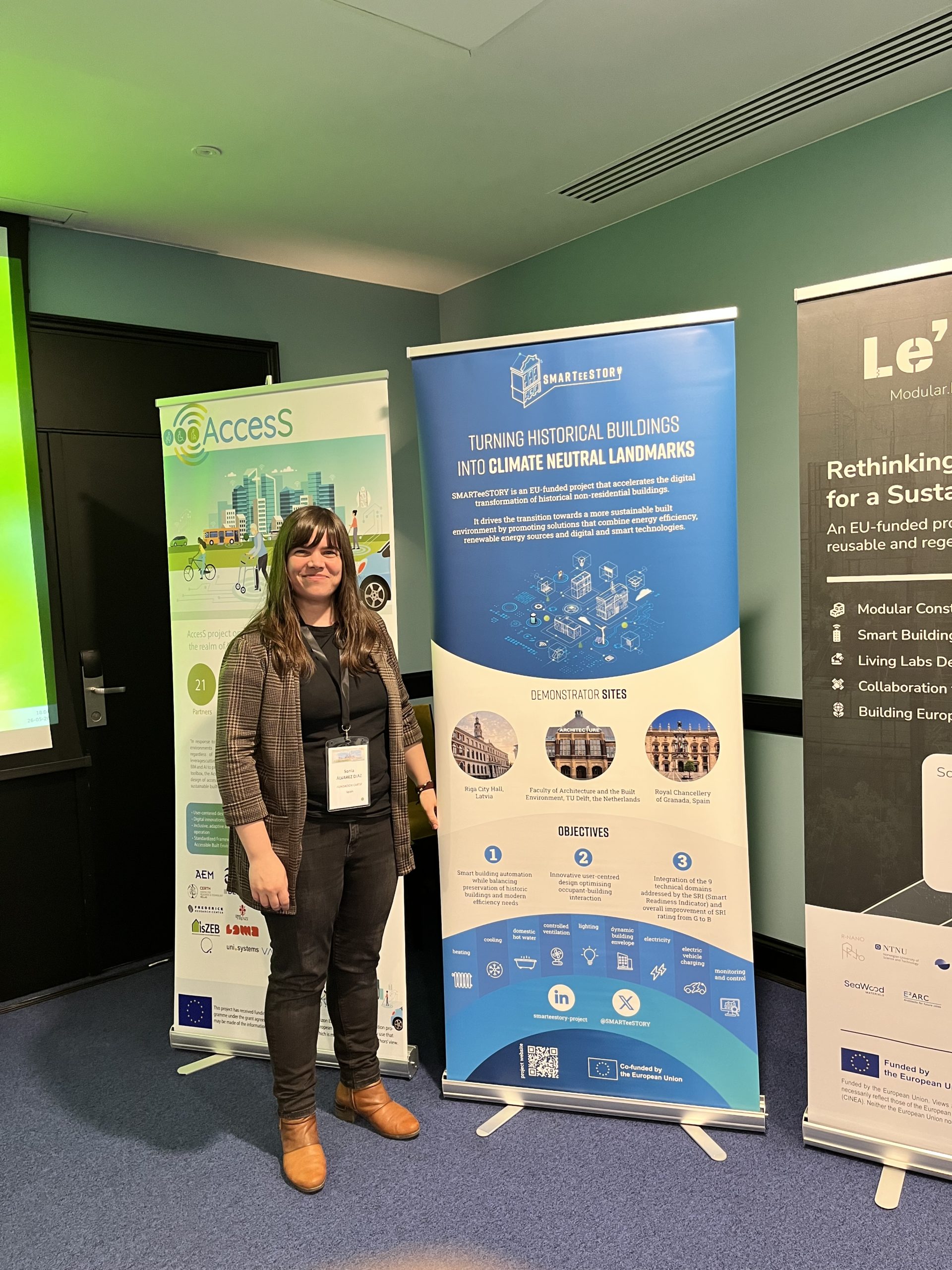
The presentation also highlighted the practical relevance of the solution for buildings where conventional energy renovation may be difficult or impossible. In the case of SMARTeeSTORY, we are demonstrating digital solutions in three historic demonstration sites across different climatic regions: the Riga City Hall in Latvia, the Faculty of Architecture at TU Delft in the Netherlands, and the Royal Chancellery in Granada, Spain. By testing the system in these diverse contexts, the project aims to show how advanced digital tools can help preserve the value of historic buildings while improving their energy performance, comfort and operational efficiency.
The session concluded with a round-table discussion moderated by CEMOSA, where speakers and participants reflected on the main barriers limiting the large-scale adoption of cutting-edge digital solutions in the building sector. Drawing on the different solutions presented during the session, interoperability issues and data fragmentation were identified as key challenges for the deployment of Digital Twins, Digital Building Logbooks, and other smart building technologies. The discussion also highlighted the importance of developing solutions that respond to the real needs of facility managers and end users, ensuring that technological developments provide practical value in real operational environments.
The audience actively contributed through an interactive survey, confirming these concerns. Lack of interoperability and common data standards emerged as some of the most significant barriers to scaling digital building solutions, while investments in interoperability, data standards, and skills development were identified as key priorities for accelerating digitalisation. Participants also recognised data-driven decision-making across the building lifecycle as one of the most valuable benefits provided by digital technologies.